
2026 Buyer’s Guide • CES-era silicon • AI PCs + gaming rigs
AMD’s newest headline parts in early 2026 land in two different worlds: Ryzen AI Max+ (Strix Halo) for premium thin‑and‑light systems and compact AI dev boxes, and the Ryzen 7 9850X3D for high‑FPS desktop gaming with 3D V‑Cache.
TL;DR
- If you want a powerful laptop without a discrete GPU: look for Ryzen AI Max+ systems. AMD positions Max+ parts for premium ultrathins, mobile workstations, and small form factors that need strong integrated graphics plus a dedicated NPU.
- If your priority is top desktop gaming performance: the Ryzen 7 9850X3D is AMD’s newest X3D gaming CPU (Zen 5 + 3D V‑Cache).
- Practical rule: choose by workload and thermals. A “latest” badge doesn’t matter if the chassis can’t sustain it or if your apps don’t use it. For local AI, memory capacity usually matters more than peak TOPS.
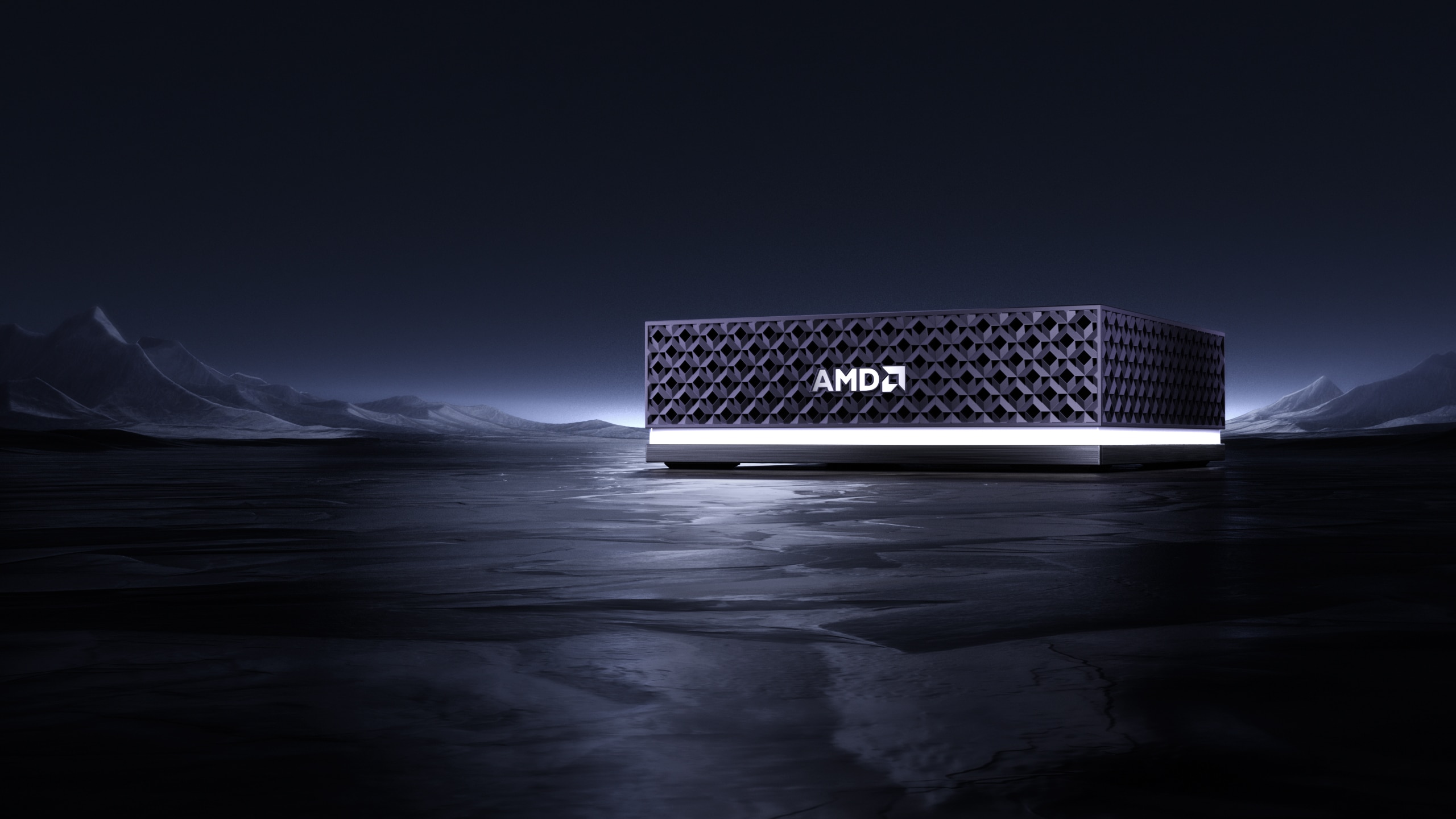
Image gallery (official AMD sources)
Tap an image to expand. These are pulled from AMD-hosted assets on AMD.com / AMD Newsroom.
First, what “latest AMD processor” actually means
When people ask for the “latest processor from AMD,” they’re usually asking one of two questions: (1) What’s the newest high-profile CPU that AMD is shipping or announcing right now? or (2) What’s the newest chip that makes sense for my build? Those are not always the same thing.
AMD’s early‑2026 messaging makes the split explicit. On the mobile side, AMD is pushing Ryzen AI Max+ as a “premium ultrathin + workstation + small form factor” platform with strong integrated graphics, a dedicated NPU, and an architecture designed to run modern AI workflows locally. On the desktop side, AMD is doubling down on its gaming identity with the newest X3D part, the Ryzen 7 9850X3D, built on Zen 5 and AMD 3D V‑Cache technology.
So, instead of pretending there’s one “latest,” this post treats AMD’s newest headline CPUs as two products that serve two different user stories. If you’re shopping, you’ll get better results by picking the story that matches your workload. In short: pick the platform, then pick the system.
A. Ryzen AI Max+ (Strix Halo): the “do-everything” premium laptop processor
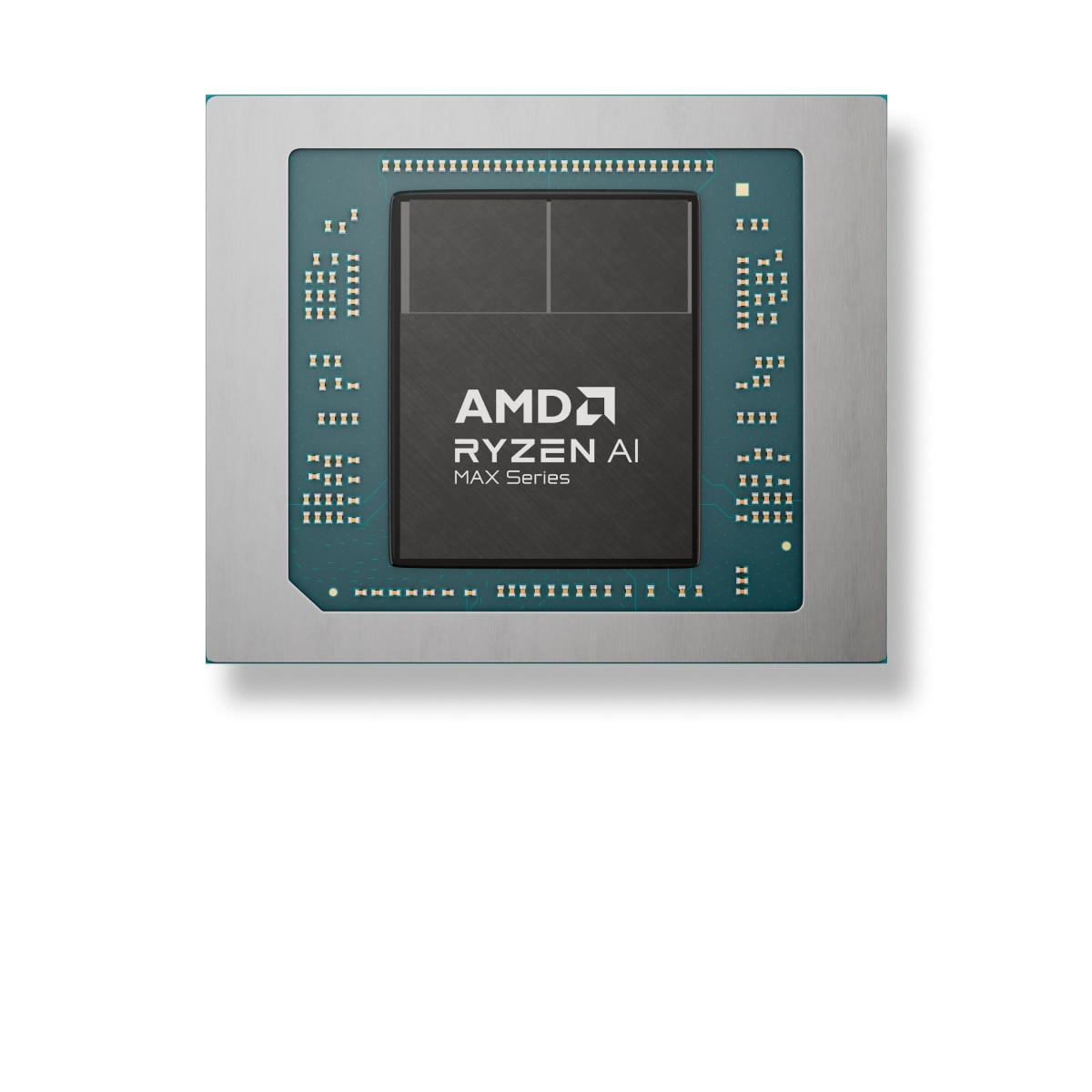
Ryzen AI Max+ is AMD’s attempt to collapse three things into one platform: a fast Zen 5-class CPU, a high‑end integrated Radeon GPU, and a dedicated NPU for on‑device AI. AMD’s CES 2026 press materials position these chips for premium thin‑and‑light notebooks, mobile workstations, and even small form-factor desktops where you want serious compute without defaulting to a discrete GPU. (In AMD’s own words, Max+ expands high‑performance AI and graphics into ultra‑thin notebooks and SFF systems.)
Why Ryzen AI Max+ feels different from “typical” laptop silicon
For years, the laptop category trained buyers to expect a predictable tradeoff: thin laptops are efficient but “light” on graphics, and creator/gaming laptops are powerful but bulky and battery‑hungry. Ryzen AI Max+ is meant to blur that line by bringing a large iGPU configuration (AMD lists Radeon 8060S graphics on the Max+ lineup) and pairing it with an NPU rated at 50 TOPS for AI workloads. That makes this platform particularly interesting for people who want a highly capable machine that stays portable.
Key SKUs to recognize
OEMs can ship multiple Max+ variants, but two names are worth memorizing because they appear repeatedly in AMD’s CES materials and product tables:
Ryzen AI Max+ 392
- 12 cores / 24 threads
- Up to 5.0 GHz boost
- Radeon 8060S integrated graphics (large iGPU configuration)
- 50 TOPS NPU
- 45–120W configurable TDP range (implementation varies by OEM)
Ryzen AI Max+ 388
- 8 cores / 16 threads
- Up to 5.0 GHz boost
- Radeon 8060S integrated graphics (same graphics model listed on AMD’s table for this SKU)
- 50 TOPS NPU
- 45–120W configurable TDP range (implementation varies by OEM)
Real‑world performance depends heavily on power limits, cooling, and memory configuration chosen by the laptop/mini‑PC maker. Treat TDP ranges as a clue to the design space, not a guarantee of sustained clocks.
Local AI: what Max+ is meant to unlock
The “AI” in Ryzen AI Max+ is not decorative. AMD’s CES partner press release highlights that Max+ systems can support models up to 128-billion parameters when configured with 128GB unified memory, enabling local inference, content creation workflows, and gaming in premium notebooks and small form factor desktops. That’s an important detail because it shifts the conversation from “Can it run AI?” to “Can it run the model sizes people actually care about without paging to disk?”
Even if you don’t plan to run giant models, an NPU and a strong iGPU can still matter in day‑to‑day usage: camera effects, background removal, live captions, noise suppression, image generation features in creative suites, and even AI assistants that run partly on-device. The key benefit is that on-device work can be faster, more private, and less dependent on an internet connection.
Gaming and creator workloads without a discrete GPU (the “why now”)
When integrated graphics becomes “serious,” the value proposition changes: you can buy a premium thin‑and‑light and still get credible 1080p gaming plus GPU acceleration for many creator apps—without the cost, heat, and weight of a discrete GPU.
AMD’s own CES 2026 press release also highlights a new mini‑PC concept called Ryzen AI Halo, positioned as a compact system designed to bring Ryzen AI Max+ performance to AI developers “out of the box.” That’s a strong signal that AMD views Max+ not only as a laptop CPU, but also as a platform for compact edge inference and developer experimentation.
How to shop for a Ryzen AI Max+ laptop (so you don’t get burned)
Buying Max+ the smart way is less about memorizing the SKU and more about checking the implementation. Use this quick checklist:
- Power profile and cooling: Look for reviews that show sustained performance (10–20 minute runs), not just short spikes. Thin laptops can post big numbers for 30 seconds and then settle far lower.
- Memory capacity and bandwidth: Unified memory designs can be a strength, but only if you buy enough memory up front. If your plan includes local AI or heavy creative work, prioritize 32GB/64GB/128GB configurations where available.
- Display and I/O: If you’re shopping in the premium tier, you should get a great screen and modern ports. A fast chip inside a laptop with a mediocre panel is a mismatch for creators.
- Driver maturity for your apps: For most users, Radeon iGPU support is solid. For specialized pro workflows, check whether your specific plugins, codecs, or toolchains behave well.
- Battery behavior: Ask how the laptop behaves on balanced modes. A platform can be efficient on paper and still be tuned aggressively by an OEM.
Bottom line: Max+ is only as good as the laptop’s cooling, memory, and tuning. Read reviews of the exact model you’re buying.
B. Ryzen 7 9850X3D: AMD’s newest desktop gaming weapon
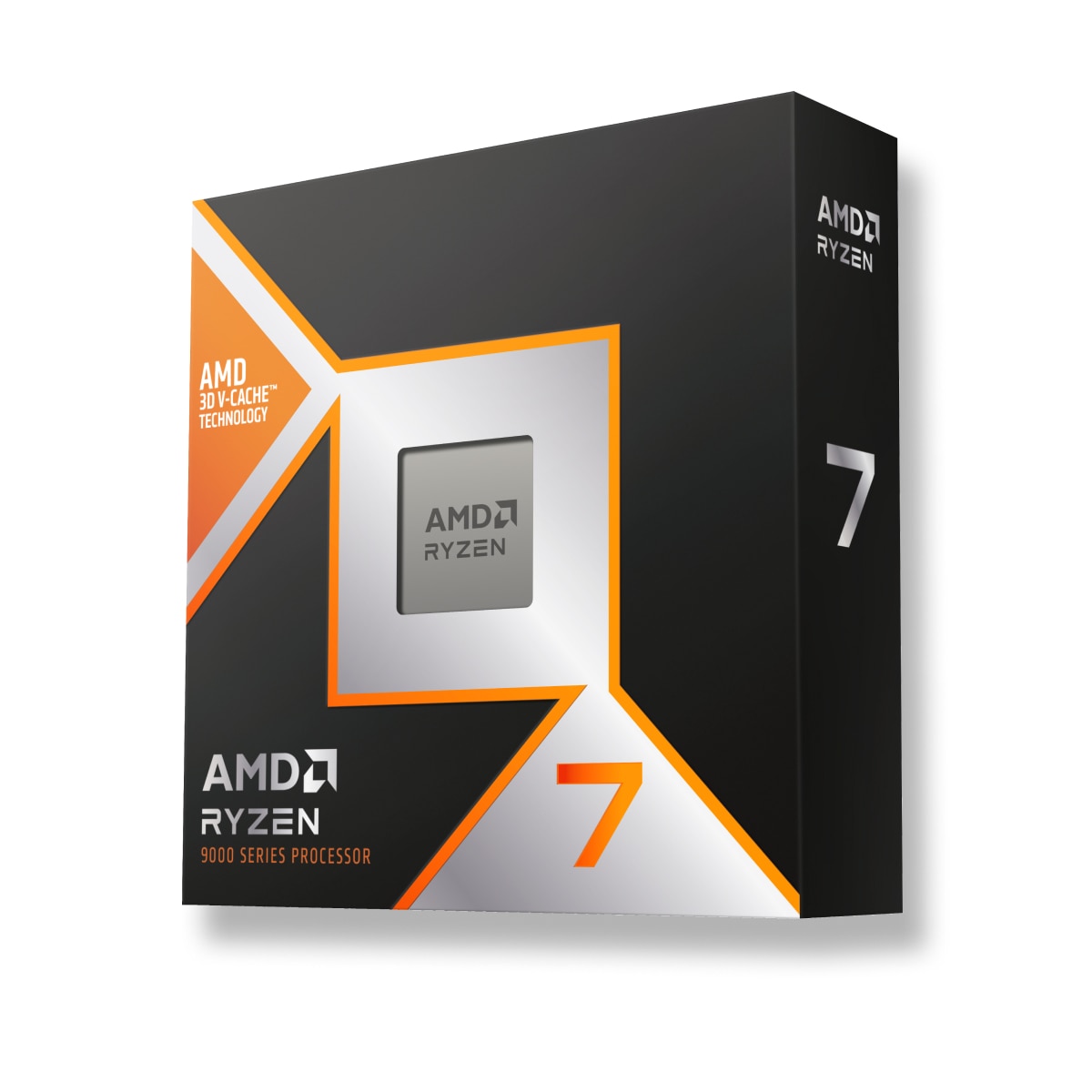
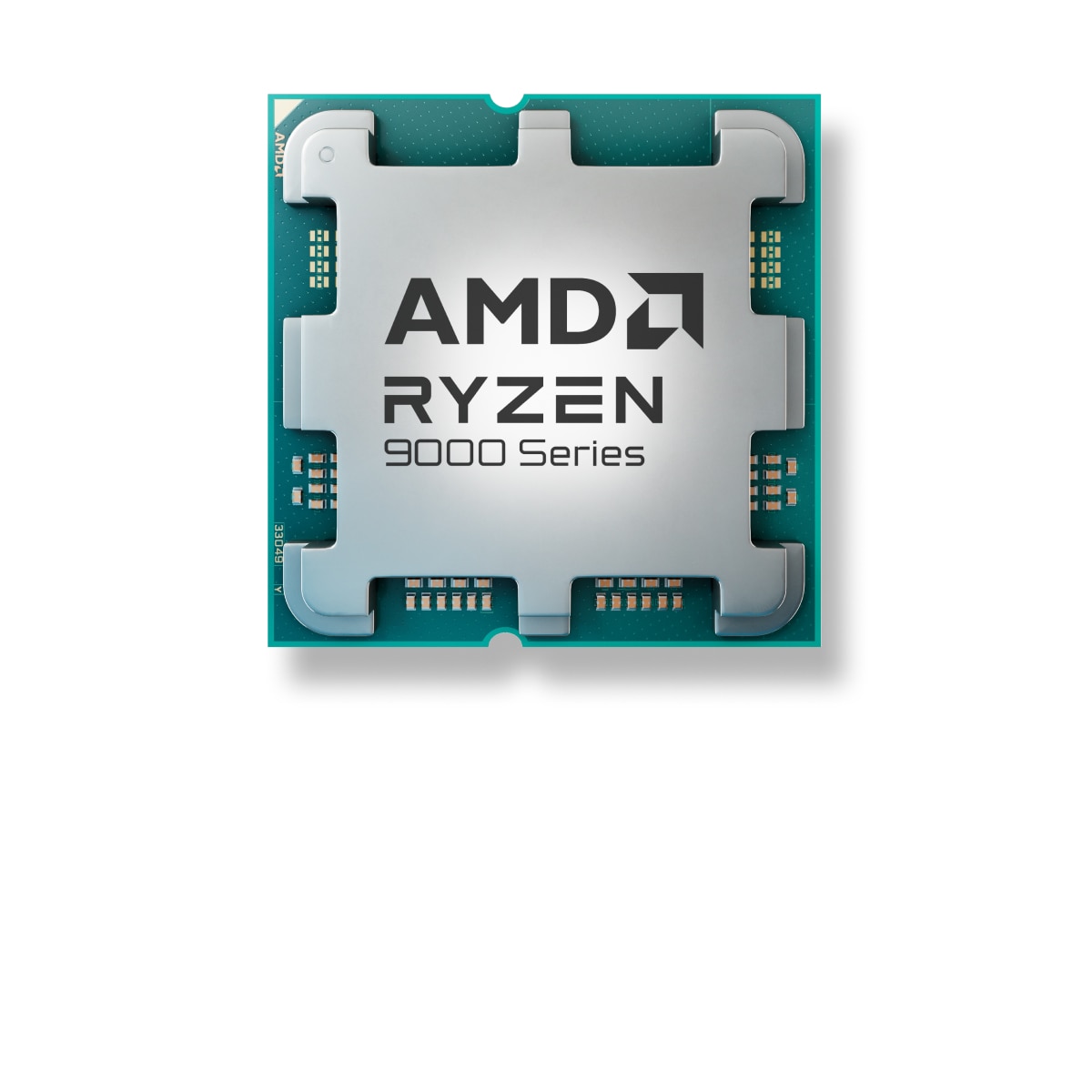
If Ryzen AI Max+ is about bringing workstation‑class capability to portable form factors, the Ryzen 7 9850X3D is about one thing: frame time consistency and high FPS in desktop gaming. AMD’s CES 2026 announcement explicitly calls it out as the newest “fastest gaming processor” powered by Zen 5 and AMD 3D V‑Cache technology.
What “X3D” really buys you
AMD’s X3D chips stack extra L3 cache (AMD’s “3D V‑Cache”) to feed game engines more data with fewer expensive memory trips. Many modern games are sensitive to memory latency and cache behavior—especially in CPU-limited scenarios like 1080p high refresh, simulation-heavy titles, or competitive esports settings where frame time stability matters as much as peak FPS.
Cache doesn’t improve every workload equally. If your day is mostly video rendering, compiling, or synthetic throughput tasks, you might see smaller deltas compared with a non‑X3D CPU. But if your primary workload is gaming, X3D has repeatedly been a simple, predictable way to improve performance in the kinds of games that punish memory latency.
Official positioning and what to watch for
AMD’s product page positions the Ryzen 7 9850X3D as “The World’s Best Gaming Processor Just Got Faster.” It also includes AMD lab testing notes comparing gaming performance across a long list of titles on a high-end test rig. You don’t have to treat vendor benches as gospel, but you should treat them as a clear statement of intent: AMD is putting the newest X3D part at the center of its “best gaming” narrative.
Desktop shopping is simpler: you control cooling, memory, and the GPU. To feel the X3D advantage, pair it with a strong graphics card, stable DDR5, and a board/BIOS combo that’s mature.
Build guidance: how to get the “X3D effect”
Practical setup strategy:
- Pair it with the GPU you actually want to use for years. If you spend most of your budget on the CPU and skimp on the GPU, you’ll miss the point.
- Target stable memory rather than chasing extreme overclocks. Low latency and stability typically matter more than headline MT/s numbers for consistent frame times.
- Choose cooling for noise goals, not just survival. A good cooler helps keep clocks stable, but it also makes the system pleasant to use.
- Update firmware and chipset drivers. Modern platforms evolve quickly; BIOS maturity can affect performance, boot behavior, and memory compatibility.
Done right, the system feels fast in the gamer sense: smoother frame times and fewer stutters in CPU-limited moments.
Ryzen AI Max+ vs Ryzen 7 9850X3D: choose the right “latest”
These processors don’t compete head‑to‑head; they’re answers to different buying questions. Still, comparing them clarifies what AMD is trying to do in 2026: put AI acceleration and strong integrated graphics into premium mobile systems, while maintaining a best‑in‑class story in desktop gaming.
| What you care about | Pick this | Why |
|---|---|---|
| Portable workstation power without a discrete GPU | Ryzen AI Max+ laptop/mini‑PC | Strong iGPU + NPU for mixed creator/AI workloads in premium portable designs. |
| High-refresh desktop gaming, esports, sim-heavy titles | Ryzen 7 9850X3D | X3D cache strategy targets frame time stability and CPU-limited gaming performance. |
| Local AI experimentation with large memory footprints | Ryzen AI Max+ (high-memory configs) | AMD highlights support up to 128B-parameter models with 128GB unified memory (where offered). |
| Best “value” per peso | Depends on your use | The cheapest option is rarely best. Match the platform to the work you do most. |
A simple decision tree
Start here: Do you need a laptop/portable device?
- Yes → prioritize Ryzen AI Max+ systems, then choose the OEM design that sustains performance and has enough memory.
- No → you’re building a desktop.
Desktop path: Is gaming your #1 workload?
- Yes → shortlist Ryzen 7 9850X3D first.
- No → consider other Ryzen 9000 parts aligned to your creator or productivity workloads.
What AMD is signaling in 2026
Look past the SKU names and you’ll see a coherent strategy: AI acceleration + strong integrated graphics for premium mobile and compact systems, and cache-led performance for desktop gaming. That’s why “latest AMD processor” is now a category question rather than a single answer.
For buyers, the takeaway is simple: match the platform to the workload you do most, then judge the system (cooling, memory, screen, and tuning), not only the CPU badge.
Real‑world expectations: what these chips can (and can’t) change
For Ryzen AI Max+: expect capability, not miracles
Ryzen AI Max+ is exciting because it moves the “floor” of premium laptops upward: better integrated graphics, meaningful on‑device AI acceleration, and enough CPU headroom for heavy multitasking. That said, don’t buy it assuming it replaces every discrete‑GPU laptop. If your work includes sustained 3D rendering, heavy CUDA‑only pipelines, or long GPU‑bound exports in software that prefers NVIDIA, a discrete GPU can still be the more predictable tool.
Where Max+ tends to shine is mixed work: you’re editing a timeline while exporting in the background, you’re on a video call with AI noise suppression, you’re running a local model for summaries, and you still want to game at the end of the day—without carrying a thick gaming laptop. In that “all‑day premium” scenario, strong iGPU performance plus a dedicated NPU can feel like a genuine upgrade.
Also remember that “Ryzen AI Max+” is a platform label. Two laptops can share the same CPU name but behave very differently depending on memory size, sustained power limits, fan curves, and display choices. If you’re comparing models, prioritize reviews that include long, sustained tests and real battery measurements, not just short benchmarks.
For Ryzen 7 9850X3D: the biggest wins show up when you’re CPU‑limited
X3D parts are most impressive when the GPU isn’t the bottleneck. That usually happens at 1080p or in esports titles with very high refresh targets, and in simulation-heavy games that stream lots of data. If you play at 4K with ultra settings and your GPU is fully loaded, the CPU difference can look smaller because the GPU is doing the heavy lifting.
Think of the 9850X3D as an “experience” CPU: it’s about frame time consistency and headroom in moments when games spike CPU demand, not only about headline averages. If you care about competitive feel, minimizing dips, or keeping performance steady while streaming/recording, X3D is usually easier to justify.
Three common buyer scenarios
- Teacher/creator laptop that must stay portable: choose a Ryzen AI Max+ laptop with a great screen and enough memory (32GB+; more if you plan local AI).
- Living-room / small form factor PC for gaming + creation: watch for Max+ SFF designs; they can simplify thermals and noise while staying capable.
- Desktop gaming rig meant for high refresh: build around Ryzen 7 9850X3D, then spend the rest of the budget on GPU and a quiet, stable platform.
FAQ
Is Ryzen AI Max+ the same as Ryzen AI 400?
No. Ryzen AI Max+ targets premium ultrathins/workstations/SFF systems, while Ryzen AI 400 is a different AI laptop lineup announced in the same CES 2026 cycle.
Do I “need” an NPU?
You may not need it today, but NPUs can run common AI features more efficiently and enable local AI workflows without pushing everything onto the GPU. More importantly, software is being designed around on-device AI.
Should gamers care about Ryzen AI Max+?
If you game primarily on a laptop and want premium thin-and-light portability, Max+ could be compelling because of its large iGPU. If you are a desktop gamer chasing the highest frames and best consistency, the Ryzen 7 9850X3D is the clearer “latest AMD gaming CPU” choice.
What’s the biggest mistake people make when buying “the newest chip”?
They optimize for a name rather than a system. Cooling, memory, and GPU pairing determine whether “latest” feels fast.
Sources (official AMD pages)
- AMD press release: CES 2026 client announcements (Ryzen AI Max+ + Ryzen 7 9850X3D)
- AMD partner press release: 128B parameters + 128GB unified memory note
- AMD product page: Ryzen AI Max+ 392
- AMD product page: Ryzen 7 9850X3D
- AMD CES 2026 press kit
Last updated: 2026-02-09 (adjust date if you republish later).